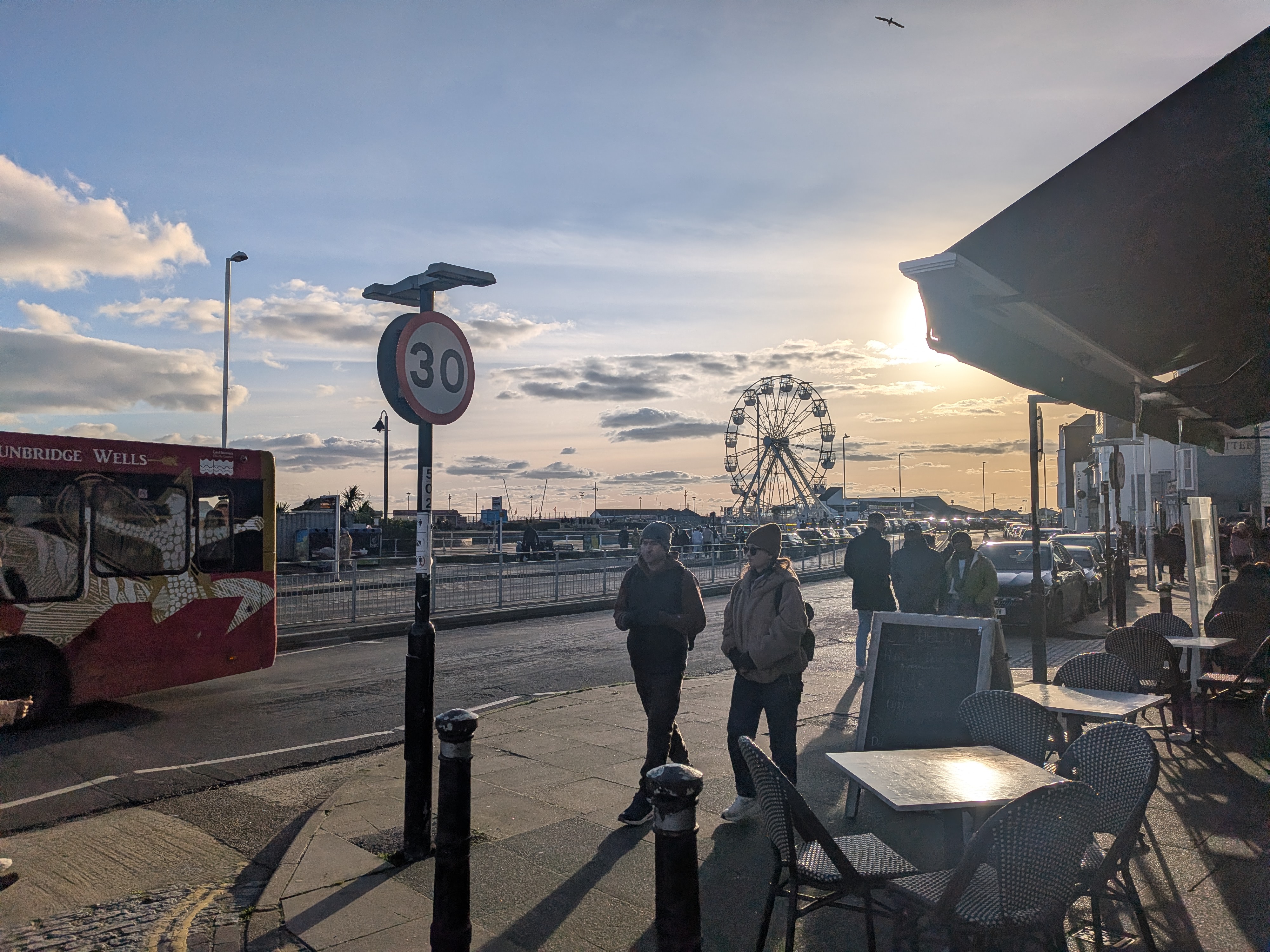
Sea, Space and a Slower Pace: A Londoner’s Guide to Buying a Home in Sussex
Robin · 10 August 2026
After more than 20 years in property, Robin Smith explains how London buyers can find a Sussex home that fits the life they actually want—from weekend escape to a slower, permanent pace.
For many London buyers, the attraction of Sussex is easy to understand. It offers the sea, the South Downs, beautiful historic towns and a pace of life that feels quite different from London, without requiring a flight or a five-hour drive.
The idea often begins as a weekend escape. Somewhere to arrive on Friday evening, breathe more deeply and spend a couple of days away from the pressure of the city. For others, the purchase is the first stage of a longer plan: a second home now, more time in Sussex later and perhaps an eventual permanent move.
After more than 20 years working in property, I have seen how easily buyers can fall in love with the idea of a place before working out whether the property will support the life they actually want.
A house can have wonderful photographs, an attractive address and an uninterrupted sea view, yet still be wrong for its owner. Equally, a property that initially appears less exciting can become an excellent long-term purchase because its position, layout and running costs make it genuinely easy to use.
The best place to begin is not with Rightmove or a list of towns. It is with an honest description of the weekends you want to have.
What do you mean by a Sussex escape?
One buyer's perfect Sussex weekend is a quiet cottage, a log burner and a long country walk. Another wants to step out of the front door and find independent cafés, good restaurants, live music and the beach.
Some buyers want complete privacy. Others imagine privacy until they discover that every pint of milk requires a drive and that nobody can enjoy a bottle of wine with dinner unless a taxi has been booked in advance.
Consider what you want within walking distance. That might include:
- A railway station
- The beach or countryside
- Restaurants and pubs
- Independent shops and cafés
- A food shop
- A marina or sailing club
- Cultural venues and galleries
- Good walks for a dog
- Friends or family who already live nearby
You should also think about who will use the property. A romantic coastal apartment may be ideal for two people but less successful when adult children, grandchildren or friends begin visiting. A large rural house may provide the necessary bedrooms but create a level of maintenance that defeats the purpose of having somewhere to relax.
There is no universally perfect Sussex location. There is only the location that fits your real routine.
Sussex is a collection of very different markets
Sussex is frequently discussed as though it were one place, but its property markets and lifestyles vary considerably.
Brighton and Hove
Brighton and Hove provide the most urban version of coastal Sussex. Buyers have restaurants, shops, theatres, music, the seafront and strong rail connections. For somebody who wants much of the stimulation of London alongside the sea, it is an obvious place to start.
The trade-off is price. Desirable houses and apartments in central Brighton and Hove command substantial premiums, particularly where they combine architectural character, outside space and parking. Competition can remain strong for the best homes, and buyers expecting Sussex prices may discover that the most sought-after streets feel distinctly London-like.
Parking should be considered carefully. So should noise, particularly around busy roads, nightlife and railway lines. A central apartment can make an excellent lock-up-and-leave base, but buyers need to examine the lease, service charge and plans for major building works.
Lewes
Lewes offers a different balance. It is an historic county town with independent shops, excellent pubs, cultural life and the South Downs immediately around it. It feels self-contained rather than like an extension of Brighton, and its railway connections make it attractive to buyers who expect to travel to London regularly.
The town's character is one of its greatest strengths, but it also means that many properties are listed or situated within conservation areas. Buyers should not assume they can replace windows, alter a frontage or reorganise a building without consent.
Lewes is also a market where a relatively short distance can create a meaningful difference in value. Views, parking, proximity to the High Street, flood risk and the climb from the station can all influence desirability.
For buyers wanting a weekend home that could later become a principal residence, Lewes deserves serious consideration. It provides enough everyday life to work permanently, rather than only as a holiday destination.
St Leonards-on-Sea
St Leonards has changed considerably, but it would be a mistake to describe it simply as “up and coming”. It already has an established creative community, strong independent businesses, good restaurants and some exceptional architecture.
The town is particularly appealing to buyers who want more space and character than their budget would secure in Brighton or Lewes. The grand terraces and villas around parts of St Leonards can offer high ceilings, generous rooms and sea views, while the area around Norman Road and London Road provides an increasingly interesting mix of food, art and independent retail.
However, buyers need to examine the immediate location rather than relying on the town name. St Leonards changes from street to street. Elevation, condition, outlook, traffic, parking and proximity to the railway can all have a significant effect.
Large converted buildings also require careful due diligence. Service charges, reserve funds, roof repairs and the management of the freehold may matter far more than new kitchens or attractive communal hallways.
Hastings
Hastings offers several distinct property markets within one town.
The Old Town has historic character, independent shops, restaurants and a strong sense of identity. Properties can be wonderfully individual, but parking, access, listed status and the practicalities of old buildings must be considered.
The central and seafront areas include apartments, period houses and buildings with mixed residential and commercial uses. Moving inland or uphill can bring larger houses, gardens and exceptional views. In some locations, buyers can secure a scale of Victorian or Edwardian property that would be unaffordable in Brighton.
Hastings works well for people who actively enjoy its individuality. It is not a polished resort designed to please everybody, and that is part of its appeal. Buyers should spend enough time there to understand the differences between the Old Town, the town centre, West Hill, Clive Vale, St Helens, Silverhill and the borders with St Leonards.
Rye and the surrounding area
Rye is one of the most immediately attractive towns in East Sussex. Its historic centre, cobbled streets, food scene and proximity to the coast make it an obvious weekend destination.
That popularity comes at a price. Beautifully presented period homes in the centre can command strong figures, and parking or outside space may be limited. Holiday demand also means that buyers should think carefully about how residential a particular street feels throughout the year.
The surrounding countryside and villages can provide more space, although rural roads, flood risk and car dependency need to be considered. Rye may suit a buyer seeking atmosphere and charm more than somebody who needs the quickest possible London commute.
The South Downs and Sussex villages
The villages across and around the South Downs provide the traditional rural escape: cottages, barns, farmhouses, gardens and open views.
These homes can deliver privacy and space, but buyers should be realistic about maintenance. Large gardens, private drainage, oil heating, old roofs, outbuildings and long access drives all require attention and money. Broadband and mobile coverage should be tested rather than assumed.
A rural home can be immensely rewarding when the buyer genuinely wants country life. It is less successful when the real objective is to visit restaurants, galleries and the coast without driving.
Test the whole journey
Travel time is one of the first questions London buyers ask, but it is often measured too simply.
The advertised train journey is only one part of the calculation. The more useful test is the time from your London front door to the Sussex property.
How will you reach the London station? Is the Sussex property genuinely walkable from its station? Will you need to keep a second car? Is station parking available, and what happens if you arrive after the car park is full? How frequently do trains run on Sundays and later in the evening?
A direct train can be more valuable than a theoretically faster journey involving changes. Reliability also matters when the property is intended for regular rather than occasional use.
The best way to judge this is to make the journey when you would normally travel. Leave London after work on a Friday and return on a Sunday evening. A pleasant midday journey for an estate-agent viewing will not give you the same experience.
It is worth remembering that moving further along the coast can change what your budget buys. An additional 30 or 40 minutes on the train may provide another bedroom, a garden, a more impressive period building or a sea view. The right decision depends on how often you will travel and what you value when you arrive.
Spend time in the area before viewing seriously
I would always encourage a buyer to spend at least one full weekend in an area before making an offer, preferably outside the height of summer.
Estate agents naturally arrange viewings when a property looks its best. Coastal towns are particularly persuasive on a bright day when the sea is calm and cafés are busy. You also need to know how the area feels in January, after dark and during poor weather.
Walk from the station to the property. Go out for dinner and return on foot. Visit the nearest shop. Try to park at the time you would normally arrive. Listen for traffic, trains, pubs, gulls and neighbouring commercial premises.
If you are considering a flat, spend time outside the building and look at how it is managed. Are the communal areas cared for? Are bins properly stored? Does the exterior suggest regular maintenance? A beautiful apartment within a poorly managed building can become an expensive and frustrating purchase.
Speak to local people. Independent shopkeepers, neighbours and pub landlords often provide a more rounded picture of an area than any property description.
Sea views and coastal reality
A sea view can completely transform a property. It can also transform its price.
The value of the view depends on its quality and permanence. A direct, open outlook from the principal rooms is very different from a glimpse between buildings or a view obtained by leaning from an upstairs window.
Buyers should investigate whether land in front could be developed and whether trees may grow or be removed. A view that forms a major part of the purchase price deserves proper due diligence.
Coastal exposure must also be taken seriously. Salt air, wind and rain are hard on buildings. External decoration may be required more regularly, metalwork can corrode and older windows can deteriorate quickly. Balconies and flat roofs need particularly careful inspection.
This does not make a coastal property a poor purchase. It simply means the maintenance allowance should reflect its location. A building facing the sea may cost more to protect than an apparently similar property a few streets inland.
Older homes need more than a superficial inspection
Sussex contains a rich collection of Georgian, Victorian and Edwardian buildings, cottages, converted schools, former commercial premises and listed properties. Their individuality is one of the reasons people buy here.
It is also why a proper survey matters.
Fresh paint and a new kitchen can conceal a building that needs substantial expenditure. Roofs, chimneys, rainwater goods, windows, damp, electrical installations and drainage should all be considered.
Traditional buildings need to be understood on their own terms. Inappropriate modern materials can sometimes trap moisture and create problems that did not previously exist. Cement render, waterproof coatings and poorly designed alterations may require correction rather than another cosmetic treatment.
Listed status does not mean a property cannot be altered, but it changes the process. Work carried out without the correct consent can become the new owner's problem, even if it was completed by somebody else. Your solicitor and surveyor should investigate previous alterations where there is any doubt.
Flood risk should be investigated, not guessed
Sussex includes coastal, riverside and low-lying areas where flood risk is a genuine consideration. Buyers should look beyond whether the property has flooded in the past.
The relevant questions include the type of flood risk, its severity, available defences, insurance terms and how lenders may view the property. Surface-water flooding can affect properties that appear some distance from a river or the sea.
Flood risk does not automatically mean a property should be rejected. Many attractive and valuable homes are in areas where some risk exists. What matters is understanding it before agreeing the price and ensuring that insurance and future resale remain workable.
The same principle applies to coastal erosion, cliff stability and private sea defences. These are specialist matters and should not be left to assumption.
Apartments can make excellent weekend homes
A well-positioned apartment can be ideal for buyers who want a low-maintenance base. There is no garden to manage, external repairs are shared and the property may be easier to secure when unoccupied.
However, the lease and management arrangements are just as important as the apartment itself.
Buyers should examine:
- The remaining lease term
- The service charge and what it covers
- The building's reserve fund
- Planned major works
- Previous service-charge accounts
- Restrictions on pets
- Restrictions on holiday letting
- Responsibility for windows and balconies
- The ownership and management of the freehold
The cost of maintaining a large period building can be considerable. A low service charge is not necessarily good news if it means no money is being reserved for future repairs.
Parking can also have a disproportionate effect on the usefulness of a coastal apartment. A property may be easy to reach by train but frustrating for friends and family arriving by car.
Do not depend on holiday-let income without doing the work
The prospect of renting a property when it is not being used is attractive. In the right location, a well-presented holiday home can generate useful income.
It is not, however, passive income.
Guests expect excellent presentation, reliable cleaning, quick communication and prompt repairs. Furniture and decoration experience more wear than in a private home. Bookings vary across the year, and the highest-income periods may be exactly when you would prefer to use the property yourself.
Before purchasing, check the mortgage conditions, buildings and contents insurance, lease restrictions, tax position and any local planning or regulatory requirements. These matters can change and should be confirmed with the appropriate professional advisers at the time of purchase.
It is sensible to calculate whether you can comfortably own the home without optimistic rental projections. Any letting income can then be treated as a benefit rather than something required to prevent the finances becoming uncomfortable.
There is also an emotional consideration. Some owners are perfectly happy sharing their property with paying guests. Others discover that the house no longer feels like their private escape. Decide which group you are likely to fall into before designing the purchase around holiday letting.
Consider the cost of an empty home
A second home continues to cost money whether or not anybody is staying there.
In addition to the purchase price, buyers need to budget for taxation, insurance, utilities, security, broadband, cleaning, gardening, repairs and travel. Apartments have service charges, while larger rural properties may need regular grounds maintenance and servicing of private systems.
Insurance conditions may require the property to be inspected at particular intervals when it is unoccupied. Water leaks, heating failures and storm damage can become much worse if nobody visits for several weeks.
Smart heating, leak detectors, cameras and alarm systems can help, but they do not replace a trusted local person who can reach the property when something goes wrong.
This is one reason why a slightly smaller, better-located property can prove more enjoyable than a large house requiring constant attention.
Think about future flexibility
Many Sussex buyers begin with a weekend home and later spend more time there. Working patterns change, children grow up and the balance between London and the coast can gradually shift.
It is worth asking whether the property could support that transition.
Is there a suitable place to work? Is the broadband good enough? Could an occasional guest room become a permanent office? Are healthcare, shops and everyday services accessible? Would the layout still work if you lived there for most of the week?
A small apartment may be a wonderful retreat but a difficult permanent home. Conversely, a house chosen solely for a possible future move may feel unnecessarily expensive and burdensome during the years when it is used only at weekends.
The answer is not always to buy bigger. It is to understand which future possibilities matter and avoid a property that closes them off completely.
Buying for improvement or development potential
Some buyers are attracted to Sussex because they believe they can buy an older property, improve it and create both a better home and additional value.
That can work, but the numbers need to be considered carefully.
Building costs have risen substantially, and period properties often reveal additional work after a project begins. Planning restrictions, listed-building consent, access, parking and neighbour considerations can all affect what is possible.
Do not assume that every loft can be converted, every rear extension will receive consent or every large house can be divided into apartments. The value of the finished property must also justify the cost.
The strongest projects usually have a clear imbalance between the existing property and what buyers in that immediate area want. That might mean improving a poor layout, restoring important period features, creating a better relationship with the garden or adding a bedroom where comparable evidence supports the investment.
Before buying, establish the likely end value using genuinely comparable completed properties. Then allow properly for professional fees, finance, contingency and the cost of selling. A project should not depend on every assumption working perfectly.
Choosing the right property
Once the preferred location is clear, the following questions provide a useful test:
- Can I reach it easily at the time I will normally travel?
- Can I walk to the places that matter to me?
- Will it work in winter as well as summer?
- Is it comfortable when friends or family visit?
- Can I maintain it without turning every weekend into a list of jobs?
- Are the parking and access arrangements realistic?
- Have I understood the condition of the building?
- Can I afford it without relying on uncertain rental income?
- Would I still want to own it if my working pattern changed?
- Am I buying the property itself, or being distracted by the view and the decoration?
A home that answers these questions well is likely to be used more often and held for longer.
Why local advice matters
Online property searches are excellent for building an initial picture, but they can make nearby homes look more comparable than they really are.
In Sussex, relatively small differences in position can affect value significantly. One side of a road may have better light or views. A steep hill can feel perfectly manageable to one buyer and rule the property out for another. A house may technically be close to a station but involve an inconvenient walk. Two similar flats may have completely different service-charge liabilities.
Local advice should not simply confirm that an area is desirable. It should explain where value changes, what compromises are built into the price and whether the property is likely to suit the buyer's intended use.
An experienced adviser should also be prepared to say when the most attractive property is not the most sensible purchase.
The final decision
A Sussex home should improve your life. That sounds obvious, but it is easy for the buying process to become dominated by bedrooms, square footage, train times and future values.
Those things matter. So does the feeling of opening the door on a Friday evening and knowing that the journey was worthwhile.
The best Sussex homes provide more than an escape from London. They establish a second rhythm: familiar walks, favourite restaurants, local friendships and a connection to a place that deepens over time.
The perfect property is not necessarily the one with the most dramatic photograph or the most fashionable postcode. It is the one that fits naturally into your life, remains manageable when circumstances change and gives you a reason to keep returning in every season.
That is the real value of sea, space and a slower pace.
About the author
Robin Smith has worked in residential property for more than 20 years. Through House Sussex, he provides independent property, acquisition and development advice to buyers, owners and investors across Sussex.